Saturday, 8 April 2017

The body 'beautiful'


Summer is peeking round the corner, waving a little hand; ‘I’m on my way’ it’s saying’, ‘dust off your Summer clothes’. A gloriously hot day is predicted for tomorrow.  My first thought is; oh blast - what am I going to wear? With my soft, doughy upper arms, bulgy belly and cellulitely thighs, I’m not ready to expose my flesh!


We all know there’s a value judgement attached to weight, don’t we?  That people say ‘well done!’ or ‘congratulations’ to you, when you lose weight. As if you’ve just made some amazing scientific discovery or run a marathon. We all know it’s a criminal offence to venture out in the sun, wearing temperature-appropriate clothes if you are carrying any extra kilos. As a woman, your BMI is meant to be as low† as the age you aspire to resemble (†under 24), no matter what your biological age; frozen in amber with no disfiguring lumps or creases. (And your crease is meant to be as smooth and hairless as a boiled egg.)


Unlike many of my contemporaries, who refer to 'middle age spread' or 'baby weight', I’ve always had a fluctuating body size. I didn’t wait around until I’d had kids or reached a certain age to get fat. My mother used to say that I was fine until I broke my arm, aged seven, and then, because I was relatively inactive for a while, I started to pile on the pounds. The way I interpreted this was that I was a ‘normal’ sized child until a freak, playground accident turned me into a human space hopper*. I went on my first ‘diet’ aged ten, when I stopped eating crisps and chocolate biscuits.  I eschewed anything that I’d been told was fattening and it worked. The approval of other people - the grown-ups, when I first lost weight, was utterly intoxicating.  
*No matter what size I am; however ‘big’ or ‘small’ I become, there is a part of me that will always feel like that space hopper
I watched a program about dieting once where it said that some people put on weight on purpose, just so they can get the buzz of praise when they do reduce. This really says something about us, as a society, doesn’t it? That we become so enamoured of the approval of others that we create a situation of gain and loss just to earn it. It’s a false high and the fluctuation can’t be particularly good for our bodies.


Whilst reading an article about the difficulty a ‘plus-sized’ woman had finding clothes in her size, I stumbled upon this blog about body positivity:
It’s creator is a woman called Megan Jayne Crabbe and she has an Instagram account where she shares pictures of herself. This is her mission statement:
"I'm a recovered anorexic, recovered self-loather, trying my best to shatter the 'not good enough' mentality we've all been taught about our bodies. As you'll know if you follow my Instagram, I'm a big fan of belly roll love, exposing diet industry lies, and wearing pastels."
I really love this woman; from her rainbow coloured hair, which makes you feel cheery, just looking at it, to her body positive, frank pictures, to the fact that she genuinely seems to want spread a positive message; spread the self-love. One of the big messages of the body positive movement is that we don’t exist for other people’s delectation and have no obligation to look a certain way. (I realise that, as a feminist, I should be totally on board with this concept, but there's a difference between knowing something, intellectually, and feeling it!)

So, friends, I’ve got a good mind to embrace this body positive thingy; who’s with me? I’m not asking you to take two giant pizzas, sandwich them together with double cream and eat them for lunch - but please feel free to do that, if you’d like. But shall we all stop bashing ourselves, drown out the inner Greek chorus of doubt and just go out and enjoy ourselves? (And let's stop disparaging other women, while we're about it. I know that you wouldn't do that, reader; you're too kind, but call out your friends if they do it. We don't need to slate someone to make ourselves feel better.)

P.S I'm wearing a dress tomorrow.

Sunday, 2 April 2017

American vs British sitcoms


When I was a kid, it seemed like the smartest, funniest sitcoms were American. They were the ones with the sardonic, wisecracking kids and the risky story-lines. Unlike British sitcoms of the time, the action was not confined to the living room; in America we were taken to news rooms, bars and police stations.
In our house, we were allowed to stay up a bit later on a Friday night to watch Cheers and I have a vague memory of my Mum shrieking with laughter at the subversive comedy series, Soap. We grew up alongside the kids in Roseanne and the droll DARLENE, was a hero of mine (despite the fact that my brother said that she looked like the lead singer from The Wonderstuff). Here was a thing; a teenage girl had the best lines in a sitcom crammed full of great lines.


Britain, on the other hand, seemed to be producing a plethora of cosy, middle class, family-centred comedy: Fresh Fields, Terry and June, No Place like Home. (The Young Ones had passed me by, I was too young for it and Vivian terrified me!) Plus there were the endless repeats of The Good Life and Butterflies. All pleasant but not particularly ground-breaking stuff*. The American comedies seemed younger, edgier, zingier.  


*Only Fools and Horses was a slow grower for me, it was a while before I appreciated it. It’s hard to evaluate it these days, because it has been repeated so much that saturation has diluted its true value. John Sullivan was the king of the working class comedy and he excelled himself with Only Fools, (he also penned the brilliant Just Good Friends). Only Fools was funny but it didn’t really ‘speak to me’ in the same way that Roseanne did. In fact, no British sitcom quite did until Spaced walked into my life, with a colossal blast of fresh air!


Spaced resonated with every brilliant line. I felt that slackers DAISY and TIM were my boyfriend and I.
Tim was a talented artist who worked in a comic book shop. He spent nights playing zombie-bashing games on his games console. He was a sci-fi geek who made geekery look cool.  
Daisy wanted to be a writer, described herself as a writer but hadn’t made any money from it and had to settle for a series of dispiritingly menial agency jobs instead (once they’d cut off her dole money). (At the risk of sounding like a narcissist) Daisy was me!** I wanted to be a writer! I’d done those menial jobs! As portrayed by the brilliant Jessica Hynes (Stevenson, as was) who co-wrote the series, Daisy exemplified the ‘90s, underachieving, smart, jokey, pot-smoking woman that I identified with. She wasn’t glossy and polished like the women in Friends, she looked like a real person. And she wasn’t humourless and disapproving like the women in Men Behaving Badly either. She was funny and quirky and flawed and I loved the fact that she got as many funny lines as Tim. (I love ‘I’m Alan Partridge’ and it will always be one of my all-time favourite comedy programs but it was a bit blokey, ditto Father Ted, Spaced showed life from a realistic female perspective.)   


**I’m not saying that you have to be able to relate to a situation to find it funny but I reserve a certain fondness for the shows which have the strongest resonance.


Daisy and Tim pretended to be a couple to get a flat but the will-they-won’t they question was only a tiny aspect of the programme; more important were the portrayal of friendships and the surreal tangents the plot took. The Spaced D.V.D had a function where you could switch on an ‘homage guide’ in case you’d missed any of the pastiches or film quotes.
I have to stop myself from watching it too often and ruining it’s freshness, ‘cause, even after all these years - it debuted in 1999, it still feels fresh.


They tried to make an American version of Spaced but it bombed. It seems that it wasn’t that easy to replicate its charm and move the action elsewhere.


There seems to be a stable of great comedy now; much of it written by and starring women:
Broad City (rude, crude, brilliant!)
Parks and Recreation


And in the U.K:
Fleabag


Are we seeing a parity in quality now, on both sides of the pond?


P.S Feel free to tell me about any brilliant, groundbreaking British comedy from the ‘80s, if you like. I do realise that I didn’t include Blackadder, which I do consider to be genius and in a class of its own.


Friday, 24 March 2017

The agony of social contact

Pixabay


It was early on in our relationship, when I bumped into my partner, whilst out with my friends one evening; we were walking along on opposite sides of the street.
“Oh, look, there’s Bob*.” Someone said and we called out and waved.
*Not his real name.
He gave us a tentative wave but carried on walking, he didn’t cross over or stop for a chat.
“That was a bit weird, wasn’t it?” One of my friends remarked.
I agreed with her and have (jokingly) berated him about it ever since.
The thing is, although I’m somewhat quick to condemn others for these little displays of social awkwardness, I’m all too guilty of committing social faux pas myself.


The slightest little social interaction can have the potential to create massive internal turmoil. The uncertainty of how to conduct myself in certain social situations sometimes makes me wish I’d stayed at home. From how to introduce yourself to strangers (on those occasions when you have to - weddings, parties, work conferences), to how to progress from small talk to proper conversation; it all throws me into a bit of a tiz. And I’m far better than I used to be, in the past I might spend an entire evening barely speaking to anyone, nowadays, if I’m with people I feel comfortable with, I can be quite loud. It’s just that, every now and again, the old discomfort raises its ugly head.


Having children added an extra level of complication to the proceedings. You were encouraged, nay expected, to take them all these mother and baby groups, soft play centres (shudder) and baby signing classes. It is vital, you are told, that your baby gets a chance to socialise (and catch a myriad of colds and stomach bugs) with other children. But, arghh! To walk into a room full of complete strangers - a lot of whom seemed to know each other already and have formed impenetrable friendship groups, is a complete nightmare for the socially ill at ease! Not to mention the tight little huddles at the school gates and in coffee shops. How are you supposed to join these masonic societies if you have trouble striking up conversations with people?
I did the whole Netmums ‘meet-a-mum’ thing (Internet dating without the promise of sex and with far more talk of weaning and growth spurts) with variable success - but that’s a whole other blog post. I made a couple of chums. First time motherhood can be incredibly lonely so it’s important to try and socialise - probably more so for you than for your baby, who is content to laugh at trees and chew pebbles, but, oh, it’s not an easy business for the terminally shy.


Here are some ‘Top tips’ for social interactions/Conversational openers, I’ve picked up along the way, some more useful than others.
  1. Work related conferences, meetings etc - The roof (ie the location) is what you have in common - “How did you get here?” “Do you live far away?” “Does your job promote feelings of deep, existential angst?”  Blah, blah, blah.
  2. Mother and baby deals - “How old is your baby?” “What’s their name?” “Have you had one of those exploding nappy situations yet? Where the liquid poo seems to reach every corner of the baby gro?”
If you have an inexplicably sociable child, like my oldest, they might do the legwork for you by running up to people and initiating a conversation, drawing you into some awkward verbal shuffling with another parent.


The thing about trying to overcome your introvert tendencies is that you often misjudge a situation, overcompensate by babbling, over sharing* or saying something inappropriate.
*E.g telling another mother in the park that you’d tried to get your children to behave by threatening to decapitate their favourite toys.


So why am I writing about this now? We-ll I saw this woman on the bus the other day who I vaguely know. We’ve spoken a few times and, as well as being one of the ‘mums’ from the school, she also now works for the same organisation as me (but in a vast place where we’ve never actually bumped into one another). It was a miserable rainy, day; some bus had broken down, the bus we were on was fairly rammed and I saw her as I went onto the upper deck.
“Hello!” I said, brightly (I think).
“Alright.” She said, in what I felt was a distinctly lukewarm, ‘don’t sit next to me’ tone of voice.
So I didn’t, sit next to her, that is. I went towards the back of the bus and read my book. But the thing is, she now blanks me, whenever I see her at school. I find that this bothers me greatly because I don’t want to be thought of as being rude…

A wise woman has suggested that I am focusing all my attention on this (relatively) insignificant problem to avoid thinking about the more important issues in my life, and she’s probably right. But until I can find some other misdemeanour to mistakenly channel all my internal angst into, this is one of the things which will continue to torment me at 3 o’clock in the morning!
Good old Pixabay again

Saturday, 11 March 2017

In praise of praise


This is a bit of a companion piece to the one on banter; a kind of opposite-of-banter type thing.


I’ve got a bit of a crush on my daughter’s teacher. It’s O.K, my husband knows about it (I think, I might have told him when I'd imbibed, one night). It’s not a big deal - he thinks the teacher looks like Mr. Tumble.
I’ve discussed it with one of the other ‘Mums’, who feels the same as me, and we think it’s because he was nice about our children.  I sat at the parent consultation yesterday (the new name for parent’s evening), listening to him sing my daughter’s praises and idly wondering if he was wearing mascara (blue eyes, inky lashes - unusual combination, non?) and reflected on how nice it was to hear positive things. Whatever anyone says, it’s great to hear that your kid is doing well because it reflects well on you, as a parent. You feel that you must be doing something right. (Of course my child is her own person and not an extension of me or anything but I can claim a bit of credit, can’t I?)
I think that I said jokingly-but-not-really to the other mother that I wanted someone to tell me that I was doing really well.


At a child information talk a few years ago a health visitor told us that you can never praise children too much. ‘Give them lots of encouragement - they can never have too much praise.’ She said.
I sometimes wonder whether, when I was growing up, the adults had been given the opposite advice - ‘For god’s sake don’t praise her neat colouring-in skills; she might get above herself’.
Someone I once worked with colluded with this; that it was a ‘thing’ when she was a child to ensure that parents didn’t give their child a ‘big head’. Affirmation was in short supply. (She had a much better job than me though, so it can’t have held her back too much)
When my friend and I watched Fatal Attraction, as teenagers, we weren’t sufficiently distracted by the vigorous sex or bunny boiling, to notice the ‘wronged wife’ character telling her young daughter that she loved her.
‘I’m going to say that to my children, when I have them.’  My friend said.
I silently agreed, not that I intended having children, but that nobody said ‘I love you’. It was seen as being overly sentimental and ‘American’ somehow.
I’m not trying to shame my parents; it was clearly a generational thing. And it is something that I struggle with a little myself; expressing affection, I’m not the most effusive person (apart from when wine is involved but I do tell my children that I love them). But it was obviously something that my friend and I craved.


Ironic then that I’ve put myself in for something which involves almost constant rejection. It’s an almost weekly occurrence to get a knock-back from an agent or a publisher. It never feels any less painful - each time is like a medicine ball in the guts (I had to stop myself from typing cannon ball there).  But I keep going back for more.


Therapy has taught me that the more of a 'core sense of self-esteem' you have, the easier it is to withstand the ‘slings and arrows’ of life. But where does this core come from in the first place? Are you born with it? Or do you need to be told, in verbal and nonverbal ways (attachment theory: http://www.simplypsychology.org/attachment.html), that you are valuable, from the moment you are born?
People who didn’t get enough affirmation when they were kids seem to be the ones most in need of it as adults. But is it even possible to redress that balance in adulthood? What I’ve observed happening, in others as well as myself, is that however many nice things you say to someone with low self-esteem, it doesn’t seem to have a lasting effect. It needs constant repetition. Or, they fall into the Groucho Marks (via Woody Allen) trap of not wanting to belong to any club that would have them as a member. In other words, they think less of you for thinking highly of them.
(BTW if you are reading this and thinking - first world problems, whining privilege etc, then sod off, I mean, consider the positive effects on society of raising happy, well adjusted children.)
I seem to have veered here, from simple praise to affirmation to, well, love. Perhaps they are all manifestations of the same thing (all wrapped up in a fuzzy, pink ball!).


Confidence is not the same as arrogance, in fact the latter could be perceived as an extreme reaction/cover-up for low self esteem.


I think that, eventually, you can redress the balance, sometimes you need need to call in the professionals (in the form of therapy), but it can be done.


In the meantime, if you see your friend sporting a rather fetching looking new hat, or roller-skating in a particularly impressive way, tell them about it!


Saturday, 4 March 2017

Banter

Henry Lloyd-Hughes: Wikipedia

I’ve been forced to reflect, recently on the nature of banter. What is it? Witty, Shakespearean repartee? Playful badinage? Verbal assault? When does it tip over into the last category?  


A simple cyber search throws up these as the top definitions of banter:
The playful and friendly exchange of teasing remarks.
The Urban dictionary goes further: Supple term used to describe activities or chat that is playful, intelligent and original.


Playful and intelligent? Do we hear a lot of that? Don’t get me wrong; I’m fond of a bit of witty sparing myself, and it’s a bit of skill, seeing how far you can push it. But do some people push it too far?


I once had a friend who could be really good company, a lot of the time  - wickedly funny, quirky, interested in lots of different things. When I first got to know him, he was a real laugh to go down the pub with. But he could also be devastatingly cruel (more Frankie Boyle than Michael McIntyre). He was like a heat-seeking missile; identifying perceived physical flaws in others:
‘She needs to sort out her teeth!’
‘She should wear a bra that fits her properly.’
‘She’s got these little blue veins in her feet.’
(All different ‘shes’ by the way; not the same person. Interesting that all the insults are against women though...)
He was like Mr Bennet’s defintition of Mr. Darcy in Pride and Prejudice; only looking at a woman (or a man) to see a flaw in them.
He was incredibly cutting. He once told a friend of mine that she would have noticed something, if she ever stopped talking! He told another mutual friend that the only woman they’d ever snag would be a mail-order bride.
He also had a real knack of finding your emotional Achilles heel and hacking it with a metaphorical axe.
‘Oh, that’s just him.’ People would say, heck, I would say. ‘You know what he’s like; he doesn’t mean anything by it.’
At a certain point, though, you had to wonder whether he did mean something by it and weigh up whether the laughs outweighed the insults or vice versa.
Ultimately the insults won out and this is someone I don’t see socially any more.


Does banter have its origins in playground insults? Sometimes it seems to be a main method of communication between men. Age doesn’t appear to be a barrier; even some older men seem incapable of greeting each other without a liberal sprinkling of insults. I get that in a culture of masculinity, where feelings have to be kept under wraps; it might be easier to slate one another, than to expose your vulnerable underbelly and say something like: ‘I’ve missed you.’ But when the insults get nasty and personal; criticising someone’s physical appearance; slagging off their partner and relations; is it a sign of insecurity?


When is a joke not a joke? “I’m only joking - where’s your sense of humour?” Call me a po-faced, humourless cow (I've been called far worse), but I don’t think there’s a lot of skill or originality involved in telling someone that they are losing their hair. But if you are not permitted to take offence at a personal remark, for fear of being accused of not having a sense of humour, then the verbal assailant has backed you into a corner. What can you do? Go down to their level and dismantle them; piece by piece. Or take the high ground, smile and turn the other cheek.
The thing is; I tell my children off for saying nasty, mean things to each other, so why should the so called grown-ups get away with it?


I'll leave the last words of this piece to my former friend; he'd seen them written on the wall of a public toilet and taken a photo of them: “Choose being kind, over being right.”

I wonder if he ever managed to take those words to heart.

Saturday, 18 February 2017

Nostalgia

13698063_10153979330013621_947997599914370562_o.jpg


Nostalgia: the British disease. A longing for a past that never was. A misty look back at sunlit hills, winding lanes and church bells; a pre-industrial, pastoral idyll. Steam trains, cream teas, thatched cottages, picnic baskets, red checked tablecloths...An Ambrosia Devon custard advert. I’m all too guilty of this kind of nostalgia myself - I love a steam train! I also love costume dramas where the characters use cigarette holders and wear vivid red lipstick. It’s an escape, make no mistake.
Bette Davis Beyond the Forest: Wikepedia

We are also nostalgic about our own past and, in a society that fetishisises youth, this is no surprise. The scanning of photos; the obsessive analysis of the unsullied, un-creased skin, the constant reminiscences. A look back at a time when your friends were your family; when you were a tribe, a gang, and together you could take on the world.


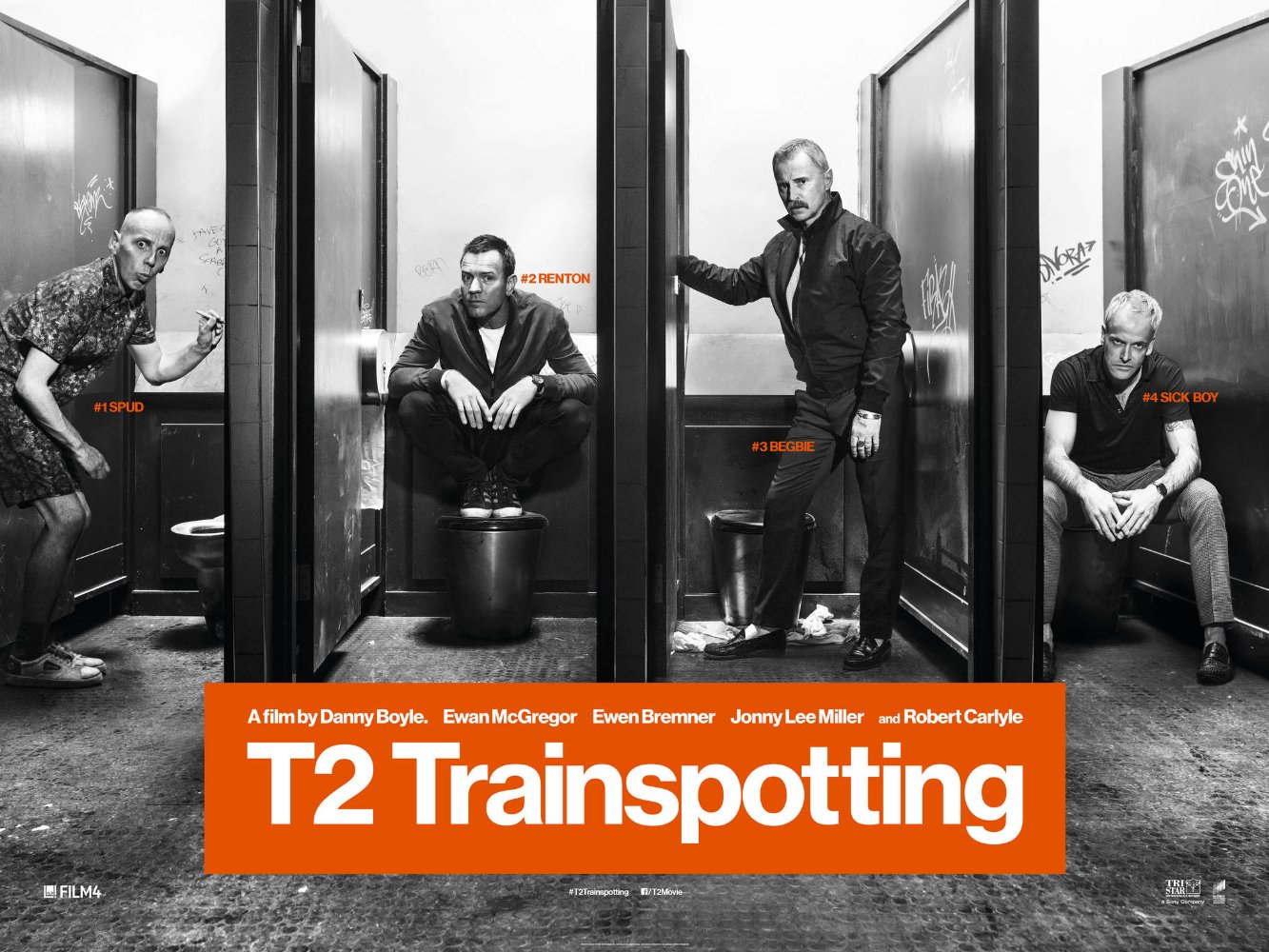
I went to see T2 Trainspotting, the other day. I was worried about it. The original film was so good. Would this follow up be an ill-advised nostalgia-fest? A cashing in on a franchise? Would it be like those terrible Jane Austen spin offs - the ones that seemed more like a hollow mockery than a loving homage?
MV5BMTUyOTkyNzUwMl5BMl5BanBnXkFtZTgwNzA2NzA1MDI@._V1_SY1000_CR0,0,1333,1000_AL_.jpg
I think they pulled it off, though. T2 Trainspotting addresses the whole nostalgia trap head-on. A younger character berates the middle aged (Mark) RENTON and SIMON (Sick-Boy) for being 'tourists in their own pasts', as they reminisce, watch old video footage and sift through photos. Director Danny Boyle has a overlay of footage from the original Trainspotting film, obtruding onto the present-day experiences of the characters. Present day SPUD hallucinates Renton and Sick-Boy of the past, running past him in Princes Street. The characters, perhaps with the exception of Mark*, are looking a little worse for wear; they are blurry round the edges, less doe-eyed and have less hair. *Even Mark (Ewan McGregor) isn’t all he seems; he looks good but his body is bearing the legacy of the past and of his advancing years. His reworking of the ‘choose life’ speech, which functioned as the heartbeat of the first film, is genius and resonates heavily.
Of course the nostalgia of Trainspotting isn’t the pastoral-idyll type that I opened with; it’s the nostalgia of pumping music and fast-paced, erudite dialogue and the original glamour of the beautiful cast (They don’t look too shabby now; look out for the scene where Mark and Simon have to wear farm sacks as kilts to protect their modesty). The original film was criticised for glamorising drug use (although anyone who saw the death of baby Dawn might refute this). The film’s defenders said that it gave an underclass of people a voice.
What the follow up does is gives a believable portrait of what those characters might be doing now. There isn’t a lot of glamour; one of the prominent, recurrent shots is of a massive rubbish dump which sits beside the estate, but there is heart.
And, like the first film, the enduring impression is curiously life-affirming, if in a more slow-moving, domestic kind of way.

I watched the first Trainspotting film when I was at University; it’s a time I often look back on through a rosy-tinted filter. (I miss my Adidas Gazelles!) But I do realise that it wasn't all clubbing and laughs then and that right here is where it's at (man). (Global politics notwithstanding) You can run into danger if you're always looking back.

Thursday, 2 February 2017

The Perils of Parenthood


I think my children are trying to kill me. That might sound over dramatic; histrionic even, but let’s look at the evidence:


  1. The perilous placing of toys - in the middle of the floor, in dark corridors, if we had any stairs I dare say they’d put them at the bottom or the top - wherever was calculated to cause the most damage. Whoops!
  2. The glacial pace at which they get ready in the morning which seems to be a deliberate ploy to induce either a nervous breakdown or heart attack or both, in their parent. Picture the scene - everyone is ready, clothes on, teeth brushed, snot smear removed from cheek. They are suited, booted, gloved and hatted but, BUT, despite the fact that you urged them both to the toilet in good time, before you left, you are halfway down the street when one of them suddenly, urgently needs the lav.
And they are creative in their stress inducing wiles, they don’t want you to get bored, they like to mix things up a bit, so one of them - the younger, more troublesome one, decides that she wants to walk to school backwards!

3) Same troublesome younger child tells you that she wants you to die. Yes, she’s only four years old, she (allegedly) doesn’t understand what she’s saying, but how old was Damien? She’s capable of glaring like him, too. And baboons go mad around her. (OK, I made that last bit up and I am starting to feel guilty for comparing my child to the one in The Omen*). But, despite the fact that I got up earlier, got everything ready the night before, used the behaviour charts to induce them to get dressed, we were still borderline late this morning. We covered the last leg of the school run so quickly that the kids were almost levitating. Left younger child at the nursery door, trembling with rage (her - not me, she objected to the pace we were going at). Gave an evil, internal chuckle.
*The old man watched the Omen the other day and looked it up afterwards, to see what the kid who played Damien is up to these days. ‘What does he look like?’ I asked. ‘Just a boring, middle aged man.’ He replied. That can’t be right - surely the actor should look like a middle-aged Sam Neill, right?

4) Their seemingly incessant fighting; involving biting, scratching thumping and walloping. (Please see above re. stress.) I might have a selective memory here, but I’m sure my brother and I didn’t fight this badly (sound of grandparents cackling all over the globe).

So, what do we reckon? Demonic children or just standard family life?